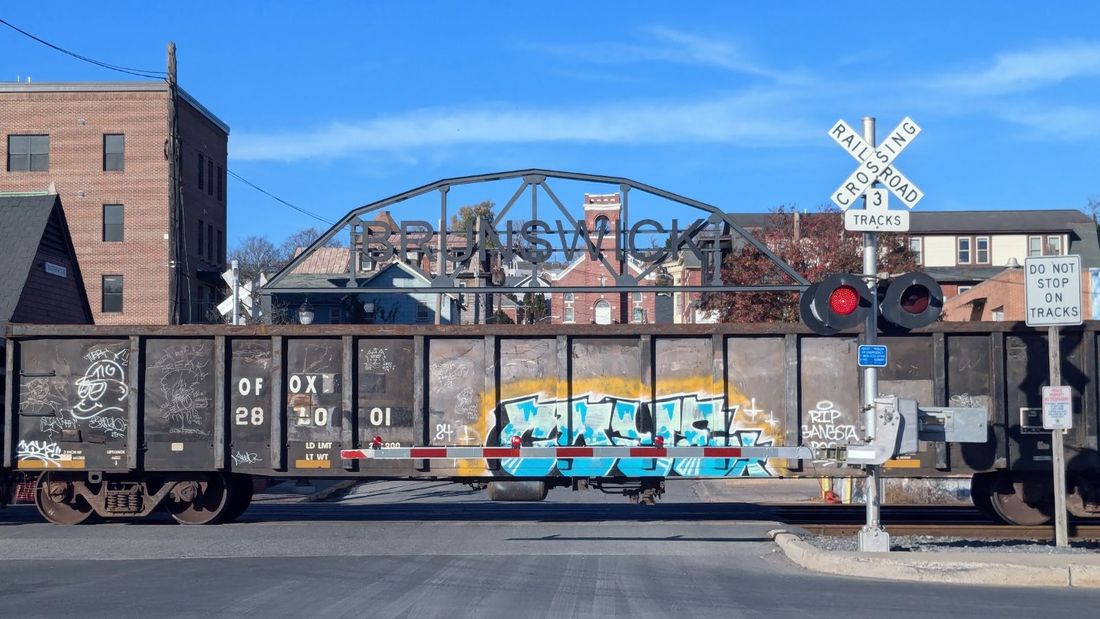
Brunswick ran on steam.
The work ahead runs on STEAM.
Brunswick was a B&O division town. The yard and the shops are why it exists. The STEAM Engine is a proposed community makerspace and gallery for the tri-state Potomac corridor, and before we lease a building or buy a single tool, we want to hear from the people who would use it.
A workshop, a classroom, and a gallery under one roof.
A makerspace is a shared workshop: the tools that are too expensive, too loud, or too big for a house, under one roof where anyone can book time on them. A laser cutter, a 3D printer, a kiln, a screen printing setup, a woodshop, a few good computers.
Most makerspaces stop there. Brunswick is an arts town as much as a rail town, so ours would not. The same floor that runs a woodshop on Tuesday hangs a show on Friday and teaches a seventh grader to solder on Saturday. Gallery nights bring people downtown, and Main Street feels it.
Tools, gallery, and classes together is rare in Maryland. Nothing like it exists in this corridor.
Brunswick spent a century building things. Let's build here again.
STEAM is what educators call the five things a space like this teaches. Here, the name is also literal: the same floor that runs a woodshop on Tuesday hangs a show on Friday and teaches a seventh grader to solder on Saturday.
Benches for electronics, materials, and sensors. Where an idea gets tested by building it.
3D printers, a laser cutter, and digital arts workstations. The gear nobody buys for one house.
A woodshop and fabrication bay. This town has always learned with its hands.
Kilns, screen printing, textiles, and a community gallery with real wall space downtown.
Pattern, tolerance, scale, and cost. The math that shows up once you have to build the thing.
One river, three states, and nowhere to make anything.
Brunswick sits on the Maryland bank of the Potomac, a few minutes from Virginia and West Virginia. Knoxville is up the road, Lovettsville is across the bridge, Harpers Ferry is at the confluence. People here cross state lines for groceries, school events, work, and the farmers market without thinking about it.
More than 25,000 people live in that catchment, and roughly 35,000 within a 25 minute drive. None of them has a community makerspace.
The nearest is Frederick Makerspace, which is a good one, 20 to 25 minutes away. That is nothing for an adult with a car. It is a wall for a 13 year old, a senior who no longer drives at night, or a parent on an hourly shift.
Sources: Frederick County workforce projections and the Maryland Makerspace Initiative Program awardee list. The catchment figures are our estimates. Replacing them with verified numbers is the point of the study.
The hard parts are already in place.
Most towns that want a makerspace have to build the conditions for one first. Brunswick already has them.
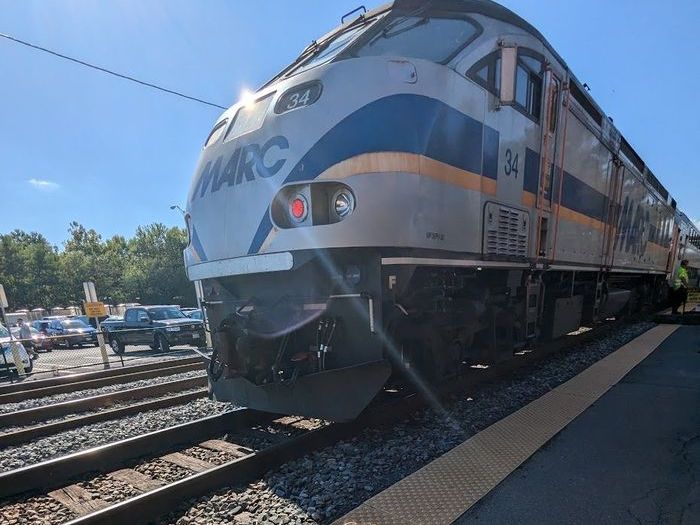
A commuter rail line
Brunswick is a MARC Brunswick Line stop with its own layover yard. No other makerspace in Maryland serves a tri-state catchment by rail.
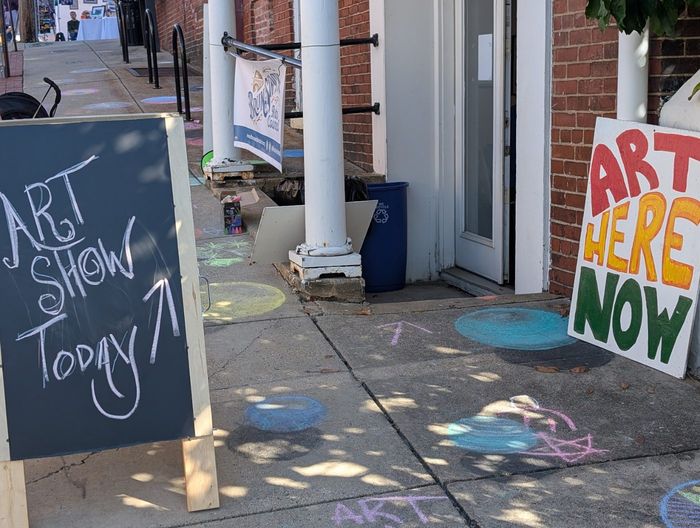
A downtown with room
A historic Main Street with empty storefronts, an active Main Street program, and merchants who would like evening foot traffic.
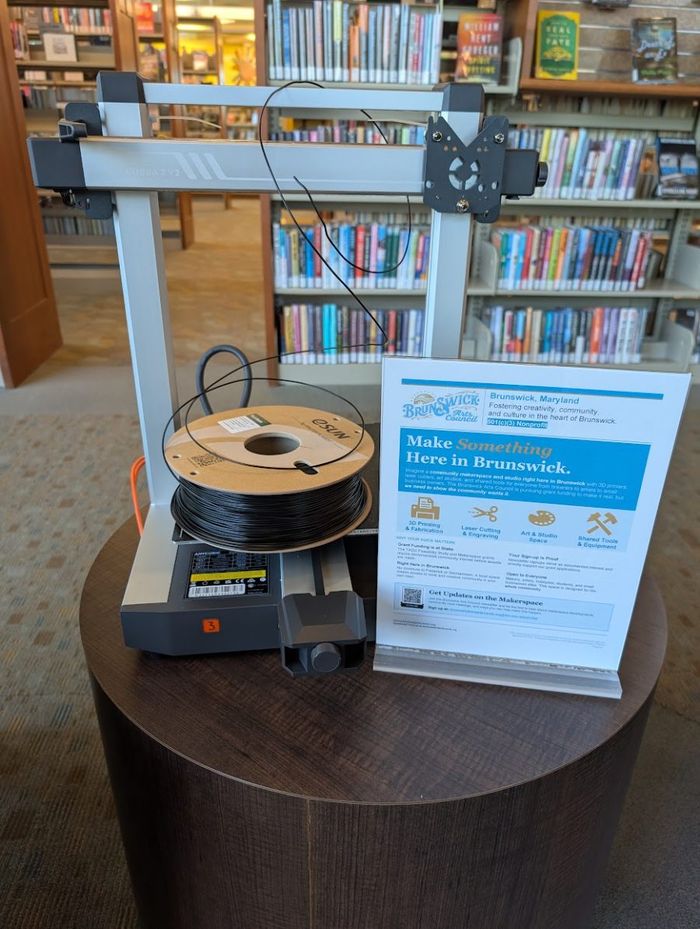
A library that says yes
A volunteer's 3D printer on display day at the branch, which also hosts our free monthly art classes, booked through 2026.
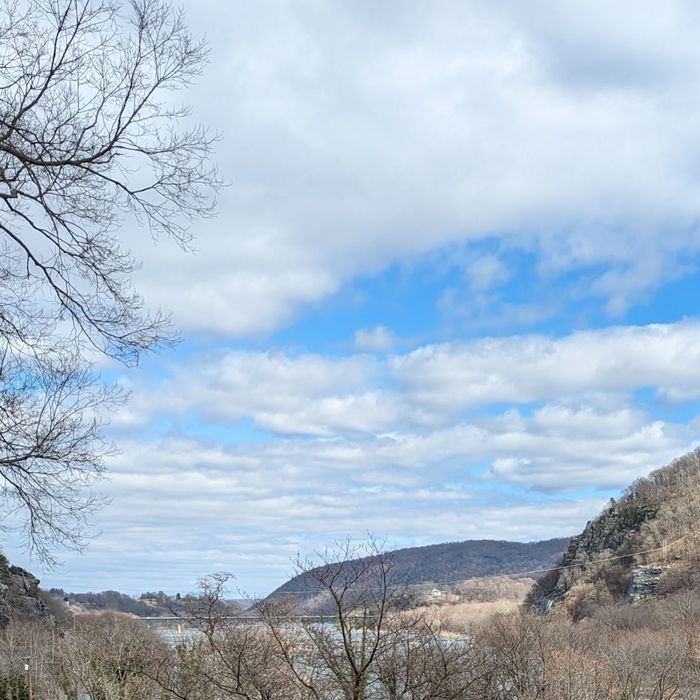
A tourism economy
The C&O Canal National Historical Park and Harpers Ferry bring visitors who buy work and take classes.
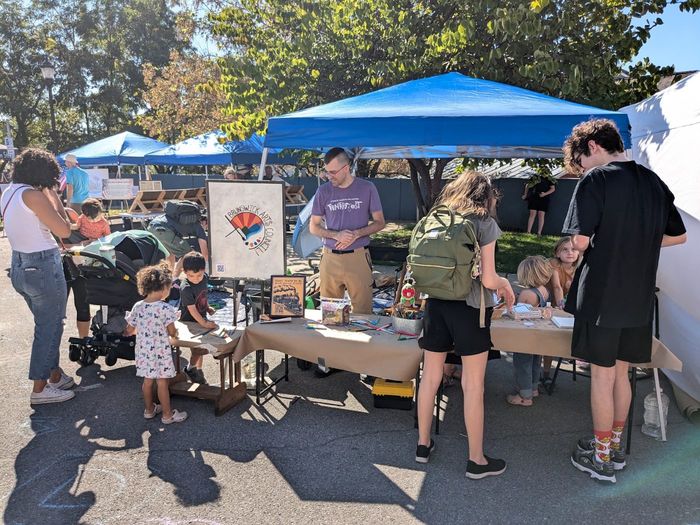
Proven demand
Our paint nights, market stations, and classes sell out. Every cycle we turn people away who ask for screen printing, ceramics, woodworking, and digital arts.
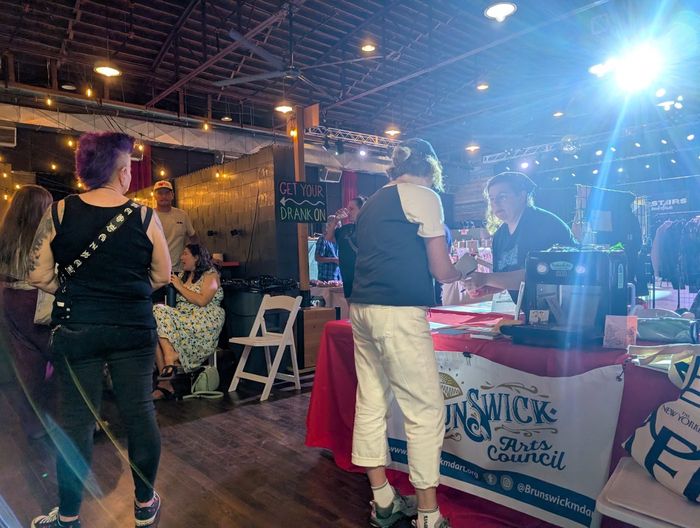
An organization already running
The Arts Council is a small 501(c)(3) that ran a full year of programming on less than ten thousand dollars.
What a funded year actually looks like.
TEDCO awarded us a Type A feasibility study grant under the Maryland Makerspace Initiative Program, and the work has started. The study is not the makerspace. It is twelve months of homework to find out whether a makerspace here can work, and what it would cost to run.
| Phase | Months | Work |
|---|---|---|
| 01 | 1 to 3 | Setup and outreach launchThe survey goes out everywhere at once: library kiosk, farmers market, schools, Main Street, paper copies. Partnership letters with the City, the library, and the schools. |
| 02 | 4 to 6 | Data collection and site analysisFour to six focus groups across age and income segments. Ten to fifteen stakeholder interviews. Three to five candidate buildings assessed for power, ventilation, accessibility, and lease cost. |
| 03 | 7 to 9 | Synthesis and modellingDemand measured and segmented. Equipment priced from real vendor quotes. A five year financial model in lean, base, and upside cases, tested against a 30% revenue shortfall. |
| 04 | 10 to 12 | Findings and launch preparationA public presentation of what we found, in plain language, whatever it says. Final report. If the numbers hold, we apply for the 2027 establishment grant. |
Every response goes into the demand analysis. We are aiming for 500 completed surveys, about 7.5% of Brunswick.
What this is, and what it is not yet.
Community projects get oversold. Here is where this one stands.
There is no building.
No lease, no address, no keys. Choosing a site is part of the study, and it has not been done.
There is no equipment.
Nothing has been bought. The tool list on this page is a proposal. Your answers shape the final one.
The grant funds the study, not the build.
TEDCO's award covers twelve months of feasibility work. Whether anything gets built after that depends on what the study finds, and on a second grant we have not applied for yet.
Your answers stay aggregate.
Responses are reported as totals and percentages. Nothing tied to you personally leaves the planning team.
Your email is separate and optional.
Give it only if you want updates. We never sell or share it, and every message has an unsubscribe link.
We will publish what we find.
Including if the answer is no. A study that can only come out one way is not worth doing.
Tell us what you would actually use.
Six questions, about five minutes. An optional second section asks about your household, your experience, and when you could show up. Those answers decide staffing and hours, so they help a lot.